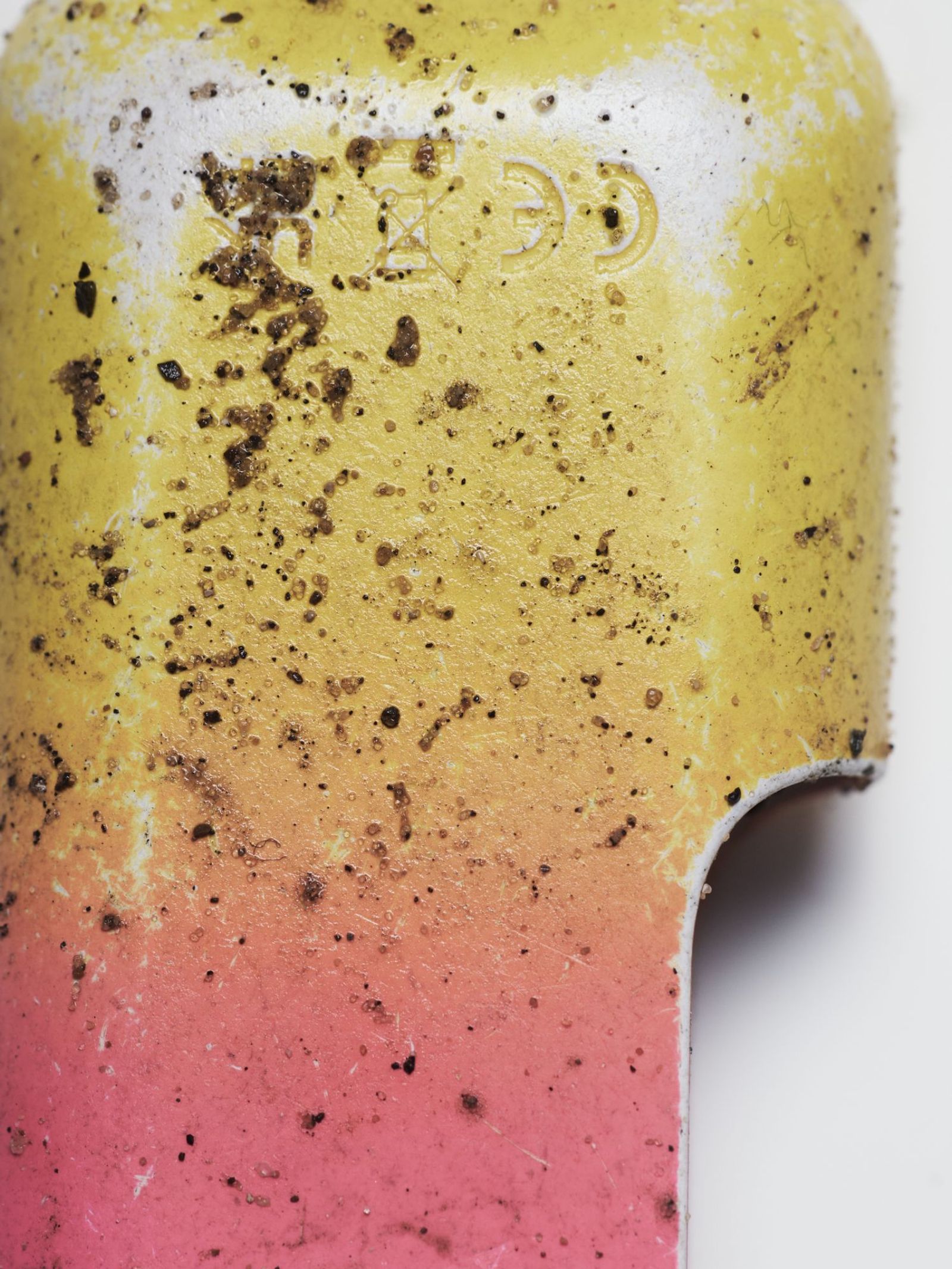
Ryan Blackwell was on a recce for a commercial shoot in Greenwich when a YSL lipstick caught his eye. It was lying among the rocks on the Thames foreshore, glistening in the sun but worn down by the river. Blackwell, a beauty photographer from Liverpool, is paid to make lipsticks like this one look worth buying. "Finding one discarded on the riverbank felt like encountering the opposite of my own work," he says. So he took it back to the studio and photographed it as if it were for sale.
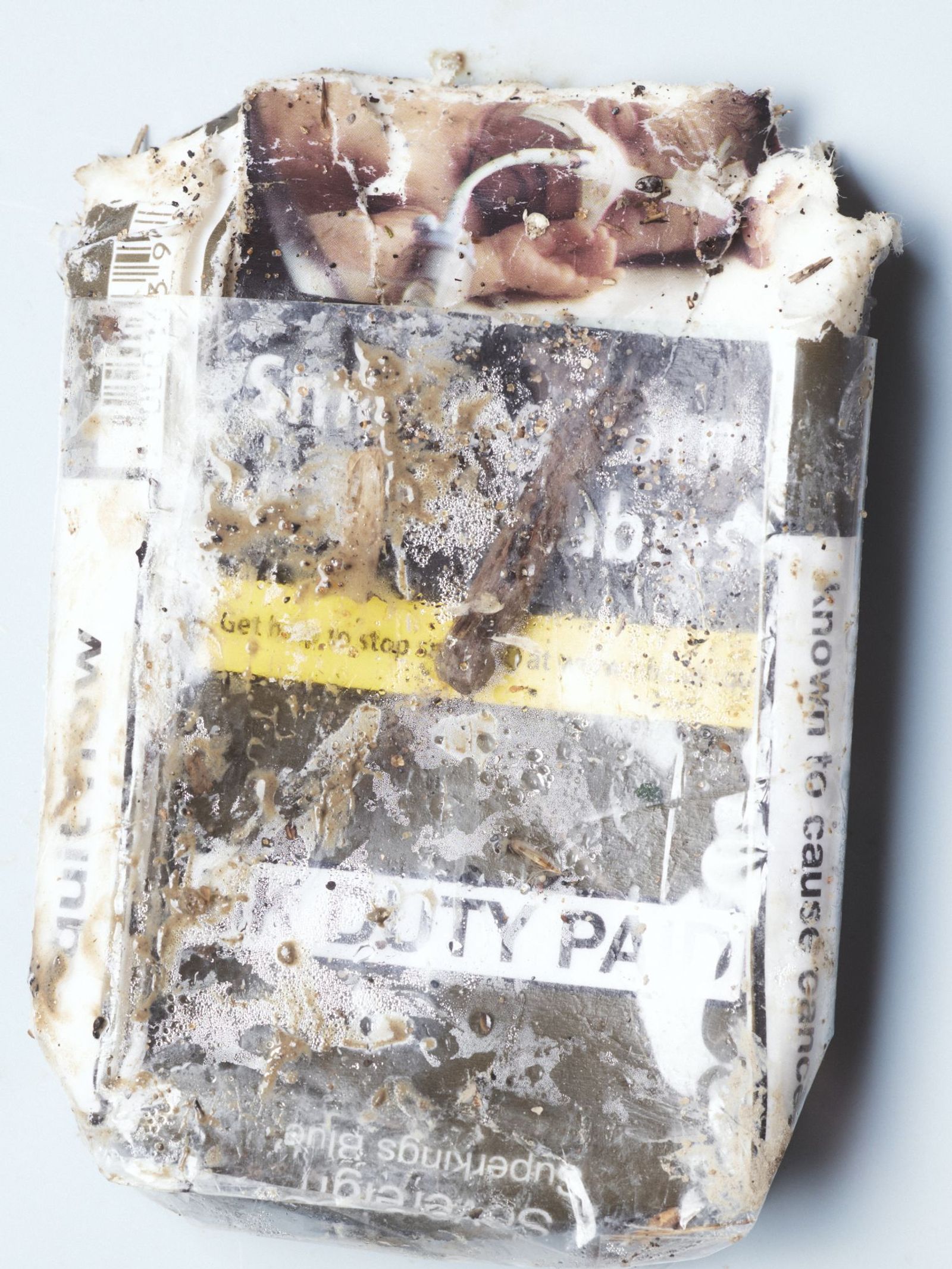
Everything collected since is at the heart of Lost & Found, his exhibition at ANNEX, The Koppel Project, from 12 to 17 November. Vapes, gloves, cigarette packets and scraps of fabric are lit with the care usually given to a bottle of perfume. Returning to the river led to research into mudlarking, and to the question of when something becomes waste. Every product has a life, from the advert that makes us want it to the day we throw it away. Photographing these objects adds another chapter.
The collecting itself is far from glamorous. Blackwell goes down to the foreshore with bags and gloves, and some days comes back with nothing. Most mudlarkers are looking for history; his interest is in "what we're leaving behind now, before time has had a chance to make it precious." The pull is towards things designed to be used once and thrown away, but with organic shapes. Disposable vapes are a good example: their pebble-like forms let them sink into the riverbed until they almost become part of it.
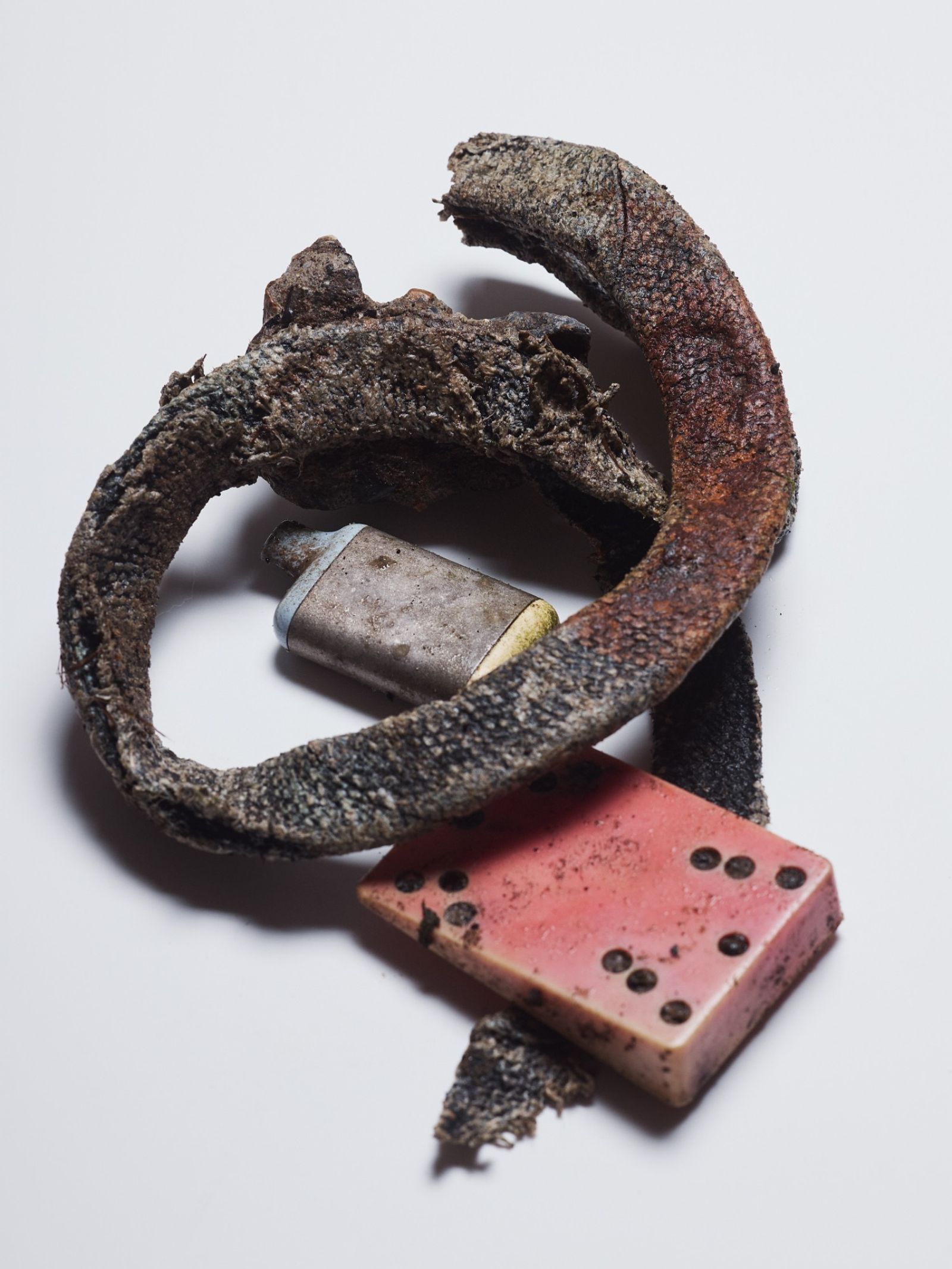
In one photograph, a disposable vape sits inside a loop of thick, mud-caked material, a pink door stop resting against it. Shot on clean white, the three could be a still life from a magazine.
The foreshore has been called the longest archaeological site in London. People have picked through it since at least the mid-1800s, when the original mudlarks, often children, scavenged metal, rope and coal to sell. When the London Museum staged Secrets of the Thames, its first major mudlarking exhibition, a curator compared the clay pipes on display to the disposable vapes of their day.
"We're all collecting things that were once discarded," Blackwell says. "The difference is that enough time has passed for their rubbish to become treasure." The river makes no distinction between old and new; we do. A centuries-old clay pipe might end up in a museum case. A vape is more likely to end up with a litter picker, or with Blackwell. There is no shortage of either. The Port of London Authority pulls up to 400 tonnes of debris out of the tidal Thames every year, from driftwood to shopping trolleys, bicycles and the occasional car.
These are portraits, Blackwell says, though there are no people in them. Every object has passed through someone's hands. "They are anonymous, but they aren't impersonal." Who owned a lipstick or held a vape is something he would rather not know. The same goes for the 100 mattresses photographed on London's streets for another part of the exhibition, stained with the traces of the most private part of our lives.
Ryan Blackwell
The photographs aren't trying to undo the commercial image. They're asking what happens after it.
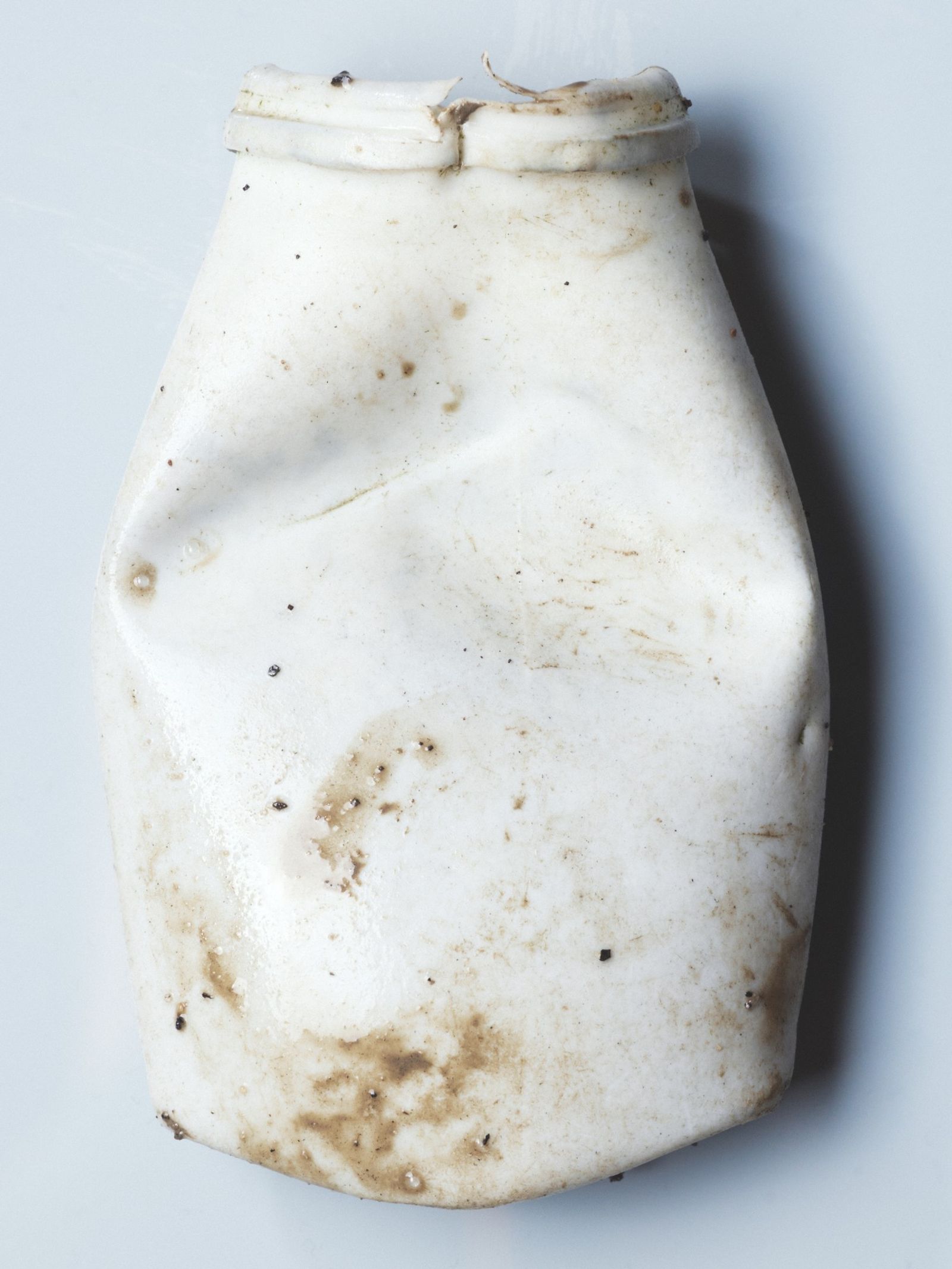
Most of the work happens back in the studio, where the link to luxury comes in through the lighting and the placement. Something pulled from the mud gets the same attention as a product being shot for sale. "I like that moment when something initially appears beautiful and then becomes slightly uncomfortable," he says. The aim is to draw viewers in before they've worked out what they're looking at, and leave them wondering why they were drawn in at all.
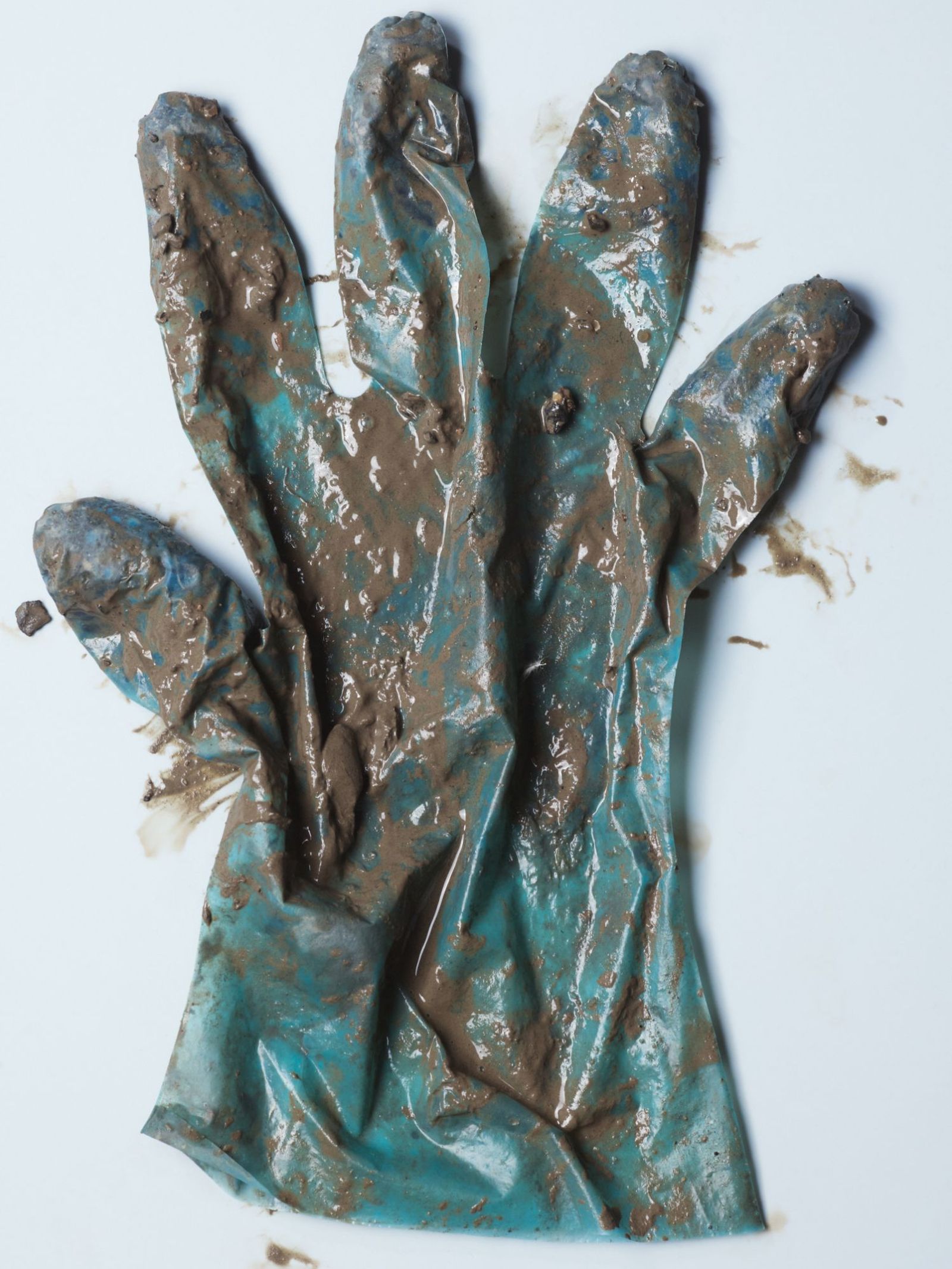
A blue rubber glove lies flat, fingers spread, still slick with Thames mud. Under the studio lights it shines like a fashion product, until you remember where it has been.
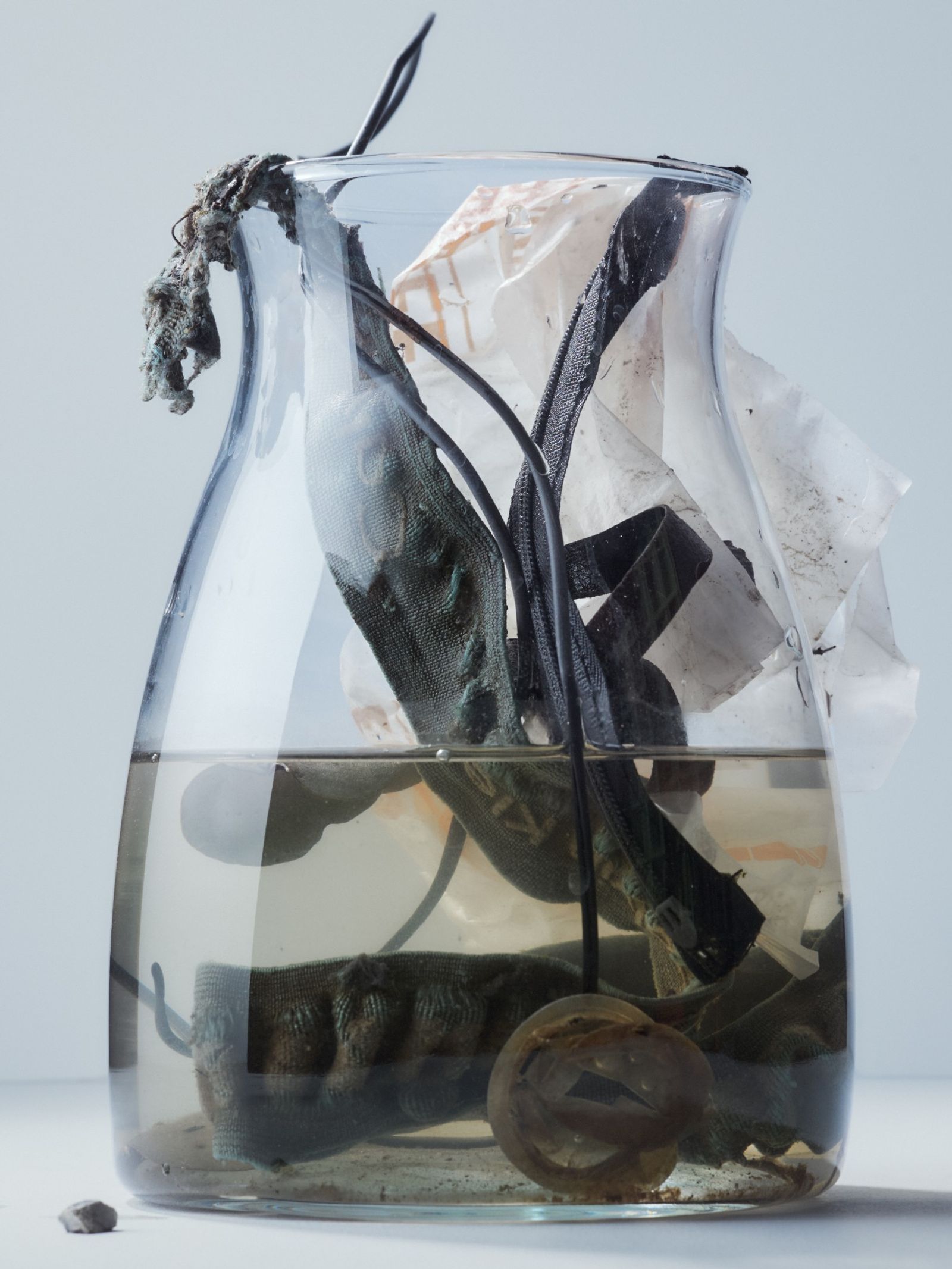
The river stays on the objects. Sometimes Blackwell brings back water or sludge to dress the image, so a glass vase holds an underwear band, cables and a burger wrapper in murky Thames water under clean studio light. The studio is controlled and the river isn't, and both are meant to show. Some of the prints in the show are large, which makes you look slowly at things that are physically small, or that we've decided don't matter.
"My commercial work helps create the desire that surrounds them," Blackwell says, openly acknowledging the contradiction. His still-life work for brands uses clean lines and seductive lighting to make products desirable, so this isn't a view of consumer culture from the outside. Here, the camera turns to what those products become once the desire has worn off.
A packet of Superkings Blue still carries its health warning and its "DUTY PAID" stamp under a skin of river grit. Packaging designed to put you off is now lit to look worth keeping.
The two sides of his practice aren't opposites. One taught him how to direct attention; the other points it somewhere else. "The photographs aren't trying to undo the commercial image. They're asking what happens after it."
Taking objects out of the river has its own problem. The mattresses are photographed where they lie and left on the street. The river objects are removed, which "makes me more complicit," he admits. He recycles what he can. Putting things back doesn't feel right either, because once an object has been taken and photographed, its relationship with the world has already changed.
It has also raised questions about the limits of photography. Blackwell points to Susan Sontag's Regarding the Pain of Others and its questions about how we respond to images. "What does it mean to make someone look at something if looking doesn't necessarily change anything?" A photograph can change how we see a vape on the riverbed. It can't change the reasons it ended up there, and he doesn't claim otherwise.
Five years in, deciding whether something is beautiful or ugly, valuable or worthless, interests him less than how quickly those judgements shift when we look again.
Blackwell grew up with another river. Near Crosby, just beyond Antony Gormley's Another Place sculptures, there's a stretch of riverbank made almost entirely of bricks and broken walls, worn by the water into smooth, pebble-like shapes. He and his sister have been going there for years. "It's a reminder that the things we build and discard eventually become part of the landscapes around us."
Gormley is one of the artists he counts as an influence. What draws him to that kind of work is how it holds a contradiction without forcing a resolution: something uncomfortable at the centre that still finds its way back to beauty.
All profit from the Lost & Found photobook, a self-published edition of 100 copies, goes to the Trussell Trust, which Blackwell has supported since moving to London. For him, it comes back to people. The lipsticks and vapes are the subjects of the photographs, but the lives behind them are the point. "If we don't care about our neighbours, what do we have?"
The Thames has been written off before. In 1957, a Natural History Museum study found no fish between Kew and Gravesend; today around 125 species live in it. What Blackwell wants, above all, is for people to see London as worth caring for, imperfections and all. The objects in these photographs come from different lives, but they end up in the same river. "We don't have to find beauty in everything, but perhaps we can learn to look a little more carefully at the place we call home."
Lost & Found by Ryan Blackwell is at ANNEX, The Koppel Project, 1 Tiverton Street, London SE1 6NT, from 12 to 17 November 2026, with a private view on Thursday 12 November, 6–9pm. The photobook is limited to 100 copies, with all profit going to the Trussell Trust. See more at ryanblackwell.co.uk.