Culture

When the Sheng Enters the Rehearsal Room

Playing Michael Ellison's Wanqu taught sheng player Julia Luo to listen beyond her own part. A later conversation with the composer revealed how her instrument had shaped his writing.

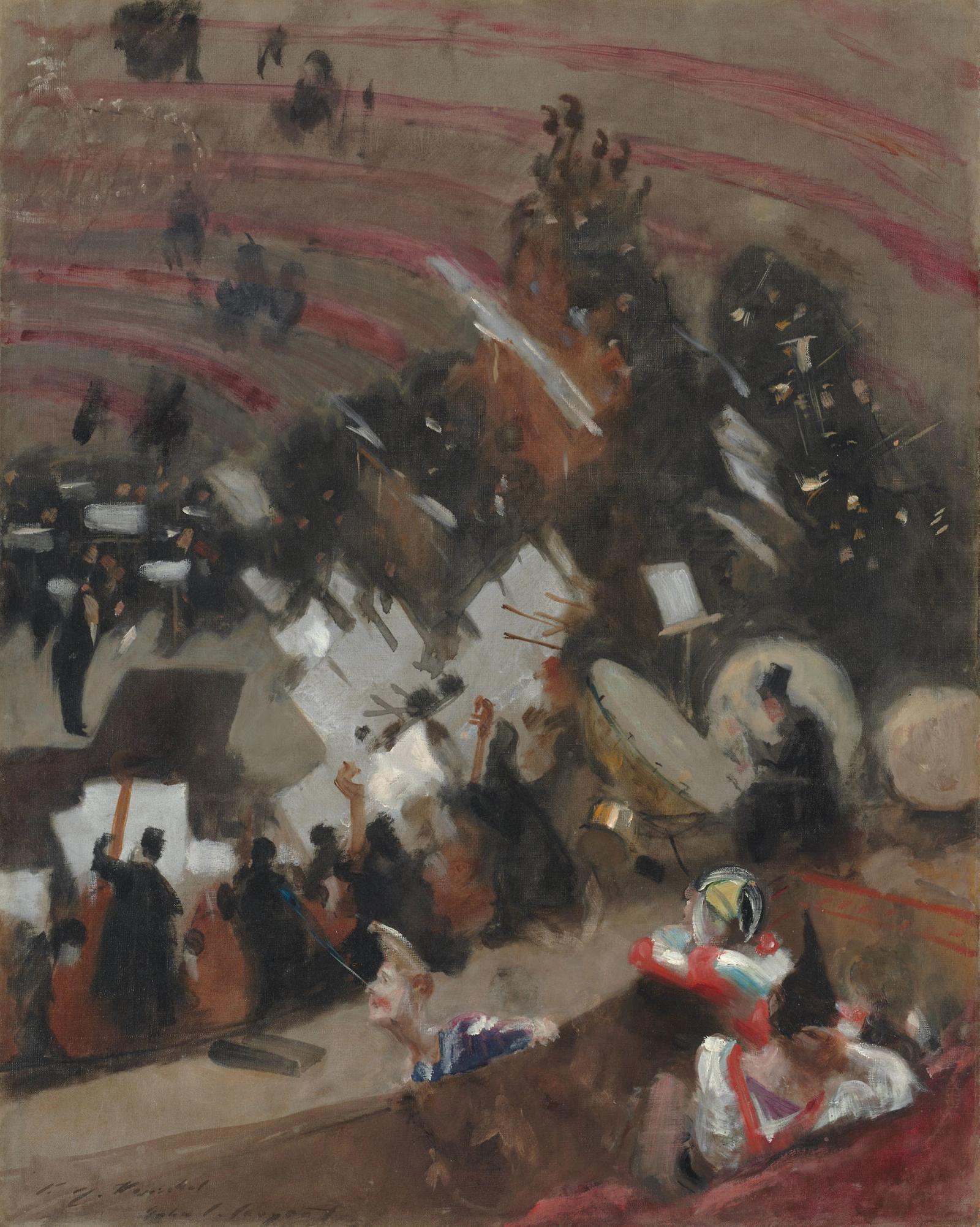
Painting of an orchestra rehearsing in a circus ring, seen from the empty seats: dark-suited players and a central conductor.
John Singer Sargent, Rehearsal of the Pasdeloup Orchestra at the Cirque d'Hiver, 1879.Photo: Art Institute of Chicago (public domain)

A note on a page can look perfectly clear until someone tries to play it. I trained as a euphonium player, so following a score is familiar to me: I look for articulation and dynamics, watch the conductor and listen to the players around me. When I play sheng, those habits come with me. So do years of Chinese repertoire, where I learnt to recognise the character of a phrase by hearing it. In a new piece, I sometimes have to stop and ask which of those habits is helping, and which is making me expect something the composer hasn't written.

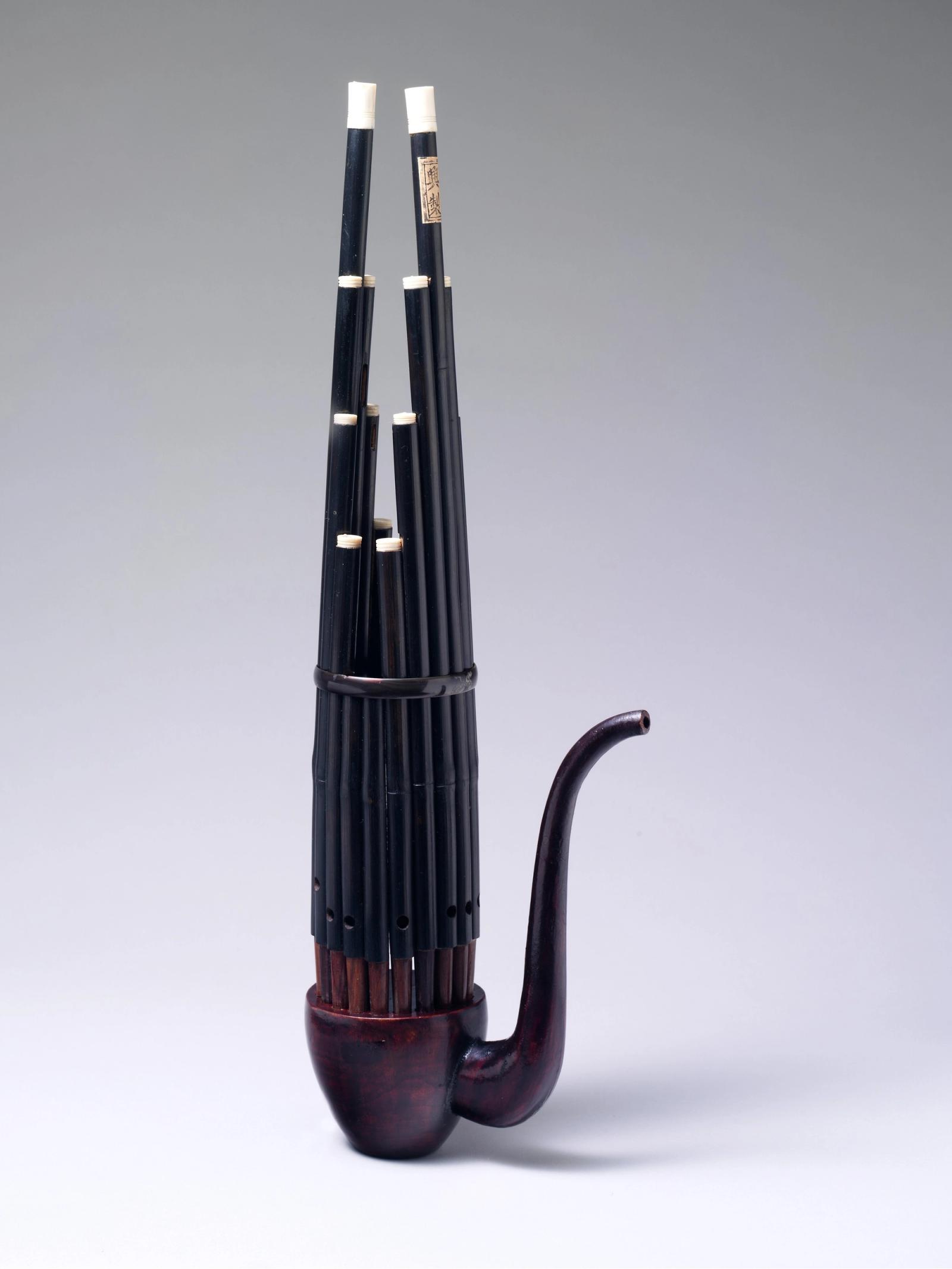
The sheng is a Chinese bamboo mouth organ. Its free reeds sound on both inhalation and exhalation, so I can sustain notes and play several pitches at once. A range chart can show which notes are available. It can't tell a composer how easily a particular figure can be shaped, or how its colour changes from one register to the next. Two notes may both be on the list without the movement between them feeling equally natural. Those are questions I usually answer in rehearsal rather than on paper.

In August, I played sheng in the UK premiere of Michael Ellison's Wanqu (《弯曲》, also known by its English title, curve) at Holy Sepulchre London. The performance on 27 August was part of the London International Chinese Music Festival, with Yajie Ye conducting a mixed Chinese and Western ensemble. The expanded Wanqu is scored for xiao, sheng, sanxian, nanguan pipa, pipa, paiban and percussion, yueqin, zhongruan, daruan, violin, erhu, zhonghu and guzheng. Of everything I played that week, it was the music whose language felt least familiar. In some exchanges between parts, I had to hear the end of another player's gesture before making my own entrance, while keeping the conductor in view. Knowing my notes was only the first stage. The harder part was learning where they belonged.

A traditional Chinese sheng: bamboo pipes of different lengths rising from a round metal base with a curved mouthpiece.
A sheng made in China around 1850.Photo: The Metropolitan Museum of Art (CC0)

Ellison's starting idea was a pipa note bent upwards extraordinarily slowly. On a plucked string, that movement has a physical origin: the player changes the pitch with the hand. Across a larger ensemble, the gesture can't simply be handed from one instrument to the next. A reed won't bend like a string, and each of us had to find our own way into it through our own technique.

In October, I met Ellison in Bristol, and our conversation returned to that problem. He explained that an earlier sketch on which Wanqu was based had first been read by musicians at the Central Conservatory in Beijing, where a gaoyin sheng, a high-pitched sheng, was available. Wanqu later grew into a much larger work, and knowing that I would play a traditional 17-reed sheng in D helped shape the writing for my part. I found that revealing. Before I can shape a phrase, the composer has to know which version of the instrument will be producing it.

I told him the octave figures in Wanqu were easy to find and memorise, and that the instrument could probably do more. He said he would like to hear the piece again before deciding whether to develop it. That leaves an interesting question for both of us: how far can the writing go before it loses the sound and character of the instrument it was written for?

The conversation became most specific when we turned to glissando. I explained that I could suggest a slide through the way notes or chords change, but the result would be different from a pipa bend, and in some registers it would be less convincing. Ellison said he still had more to learn about glissando on the traditional sheng. Neither of us saw that as a reason to drop the idea. It was a reason to listen to the instrument more closely.

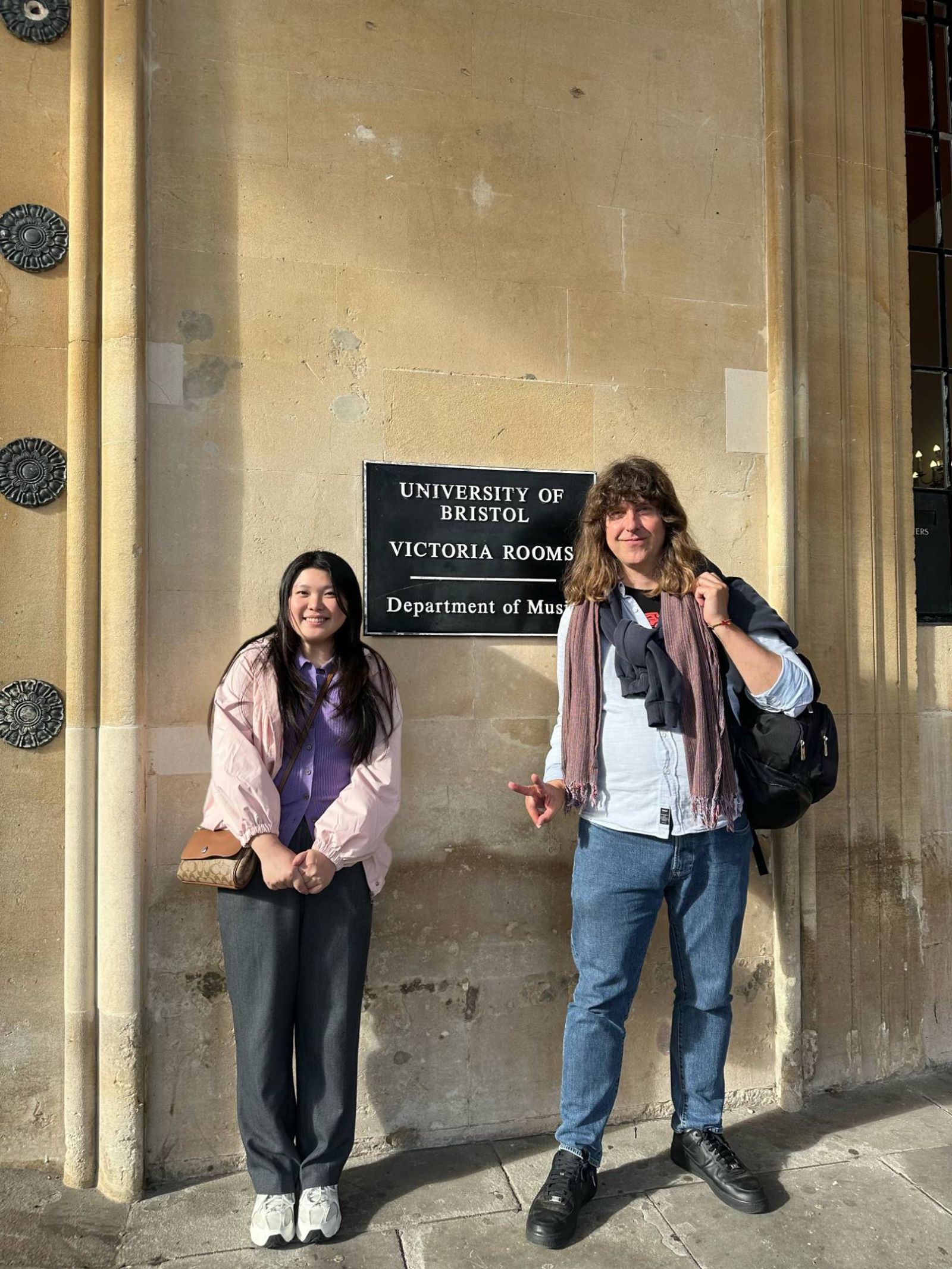
Julia Luo and Michael Ellison stand against a sandstone wall beneath a University of Bristol Department of Music sign.
Julia Luo and Michael Ellison outside the University of Bristol's Department of Music at the Victoria Rooms, October 2026.Photo: Courtesy of Julia Luo

He described the sheng as the "glue" of his ensemble. He didn't mean an instrument kept to accompaniment, and he resisted a neat split between melody and harmony. He talked instead about swelling chords and sustained pitches that seem to unfold at a different pace from the activity around them, shaping the atmosphere of a passage without carrying its tune. He is less interested in familiar triads than in clusters and larger sonorities that are harder to name. That puts a particular responsibility on me. A sustained note may look simple, but its weight, its length and how it sits against the parts beside it decide whether a texture feels held together or overbalanced.

Julia Luo

I want more people to hear Chinese instruments in new music, and I want the sheng to stay recognisable when they do.

The day before the Wanqu premiere, I faced almost the opposite problem. On 26 August I played Greensleeves with the UK Chinese Orchestra in the festival's Sound of Nature concert at SOAS. Here the melody was familiar before rehearsal began; the question was how to keep it clear in an arrangement played mainly on Chinese instruments. Near the climax, the sheng rises into its bright upper register, and I hear something of a bagpipe in it. That unexpected connection helped me. I didn't need to disguise the sheng or make it sound like a Western instrument.

I did need to judge how much of that brightness the ensemble needed. A high sheng line draws the ear quickly, and more sound wasn't always the answer. I wanted the colour to be heard without turning everyone else into my accompaniment. A dynamic marking helps, but it can't make that decision for me. I had to listen to the whole phrase and ask: is the sheng helping the tune speak, or am I becoming too interested in the colour of my own sound?

The two pieces asked different things of the same instrument. In Greensleeves, I knew the tune and adjusted my balance around it. In Wanqu, I first had to understand music whose phrasing I couldn't predict. My brass training made me fluent at reading ensemble scores and following a conductor; Chinese repertoire gave me another set of expectations about phrasing and articulation. Neither came with an automatic answer.

On the same day I met Ellison, I attended a seminar at the University of Bristol with the Taiwanese sheng musician Li-Chin Li. In the British concert world I know, it is unusual to hear the instrument discussed in such depth. Later, I asked Ellison how he works with performers. He described the value of trying ideas one-to-one, especially when a player can demonstrate a better solution than the one first written down.

That is what I would like to see more of. I can't say whether composers across Britain are getting better at writing for Chinese instruments. I can say what I'd welcome: composers hearing an instrument's existing repertoire before writing for it, and more chances to work with the same musicians over time. Hearing how a sheng player joins notes or places an ornament raises questions a range chart never will. One commission can begin an acquaintance with the sheng; coming back to it lets a composer try something else, and gives me time to grow into their writing. I want more people to hear Chinese instruments in new music, and I want the sheng to stay recognisable when they do.

None of this argues against notation. It shows what notation can't settle by itself. The number of reeds, the way a gesture is physically made, the balance of a chord and the length of another player's phrase all change what the written music becomes in the room. My questions to Ellison were technical and direct because they came from having played his piece.

A note on a page can look perfectly clear until someone tries to play it. In London, I learnt where my part belonged inside Ellison's writing. In Bristol, I asked how the piece had grown and what he might try next. Between those two moments is the work of a musician: hearing what a score asks of an instrument, and finding a way to make it sound.
More in Culture

All stories
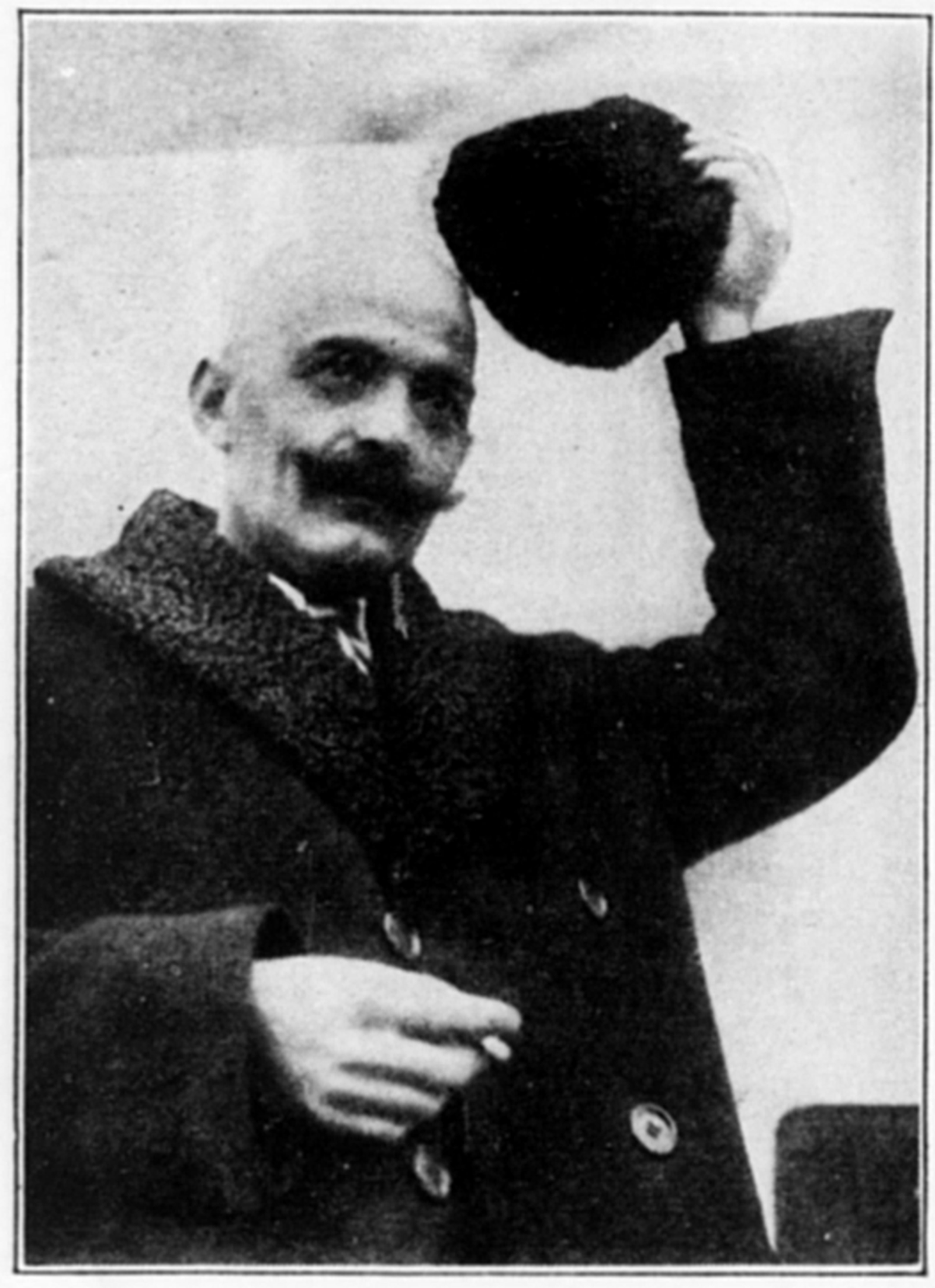
Black-and-white portrait of an older man with a white moustache and a dark fez, in a pale jacket, raising a hand.
Culture · 17.11.2020No. 008

GURDJIEFF’S FOURTH WAY

Can you achieve enlightenment without leading an asectic life?

Written by Dillon Gohil

Dark, blurred film still of a wave breaking over the deck of a fishing boat.
Culture · 11.07.2026No. 066
Open Call

Logistics and Leviathan

Freddie Smith explores how both films reveal the hidden violence and scale of global industry, reshaping how we perceive time, labour and the exploitation of the sea.

Written by Freddie Smith

Illustration in red and orange of a group of intense faces, including an older man, a woman in glasses and a shouting man.
Culture · 06.12.2020No. 012

A WEST SO WEIRD?

Whilst many reviewers of Bacurau cover the acclaimed Brazilian film’s deft manipulation of Post Western Cinema’s themes, few adequately discuss the specificities of Filho & Dornelles’ exploration of neocolonialism.

Written by Bertie Gmaj