Water as spiritual and historical
In Yoruba belief, water is not just a resource. It is alive. It carries spirit, memory, and power. Deities such as Òṣun (river goddess of fertility and love) and Yemoja (mother of waters, linked to the ocean and motherhood) show that water is seen as nurturing, protective, and deeply sacred.
Rivers and lagoons are places of cleansing, prayer, and offering. Water is used in rituals for healing, renewal, and transition. It marks beginnings and endings.
Historically, water also carries memory. Many Yoruba communities were built around rivers and trade routes. The lagoon holds stories of migration, commerce, colonial contact, and survival. In this sense, water is both a spiritual presence and a historical archive.
Image description:
In one image, two fishermen move across the lagoon in a wooden canoe. They are surrounded by vast water, suggesting scale, isolation, and daily labour. The water is both a workplace and a pathway.
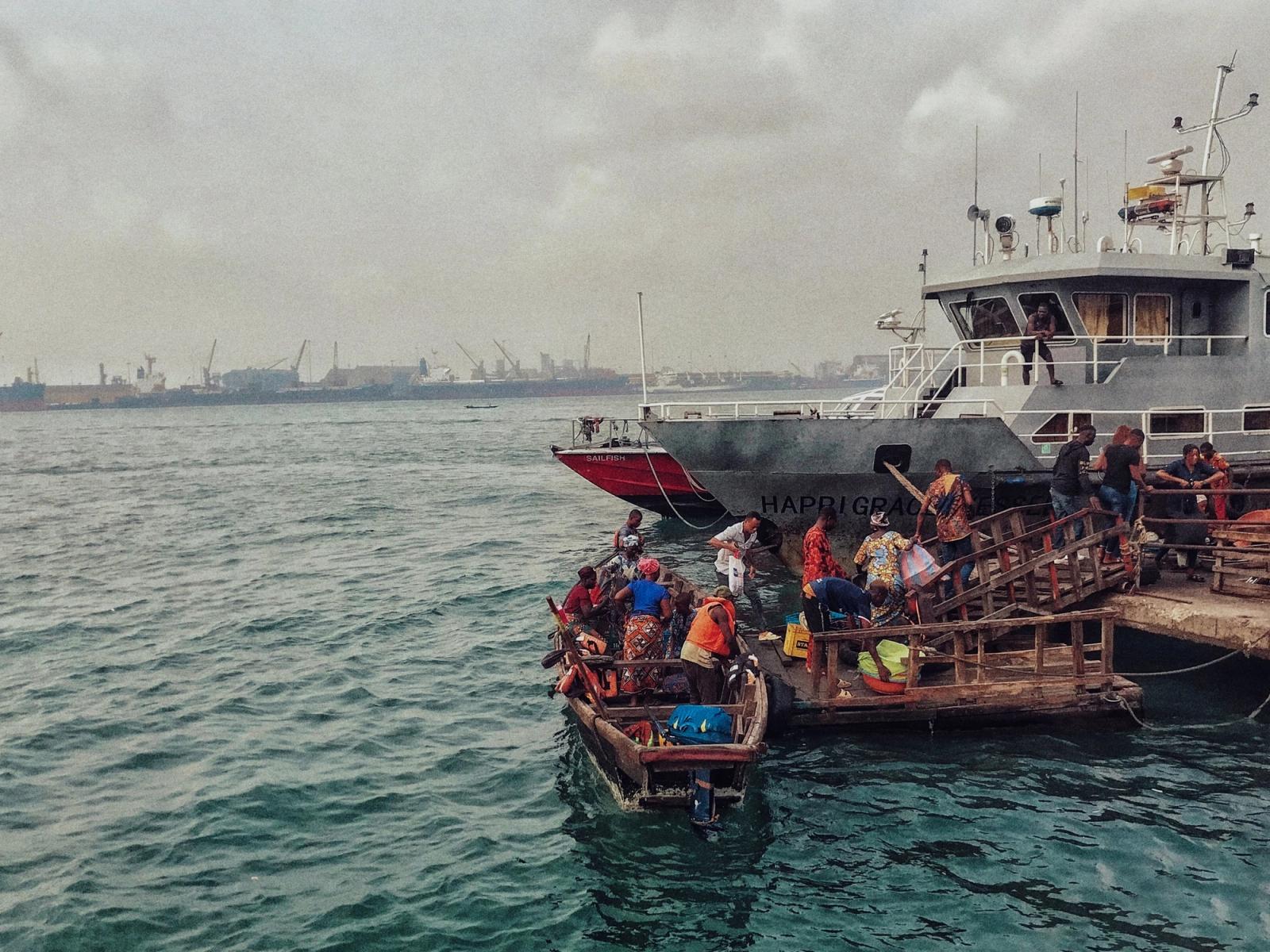
In the second image, people transfer goods and passengers between a small wooden boat and a larger vessel at a dock. It shows informal and formal systems meeting. Survival, trade, and movement happen directly on the water.
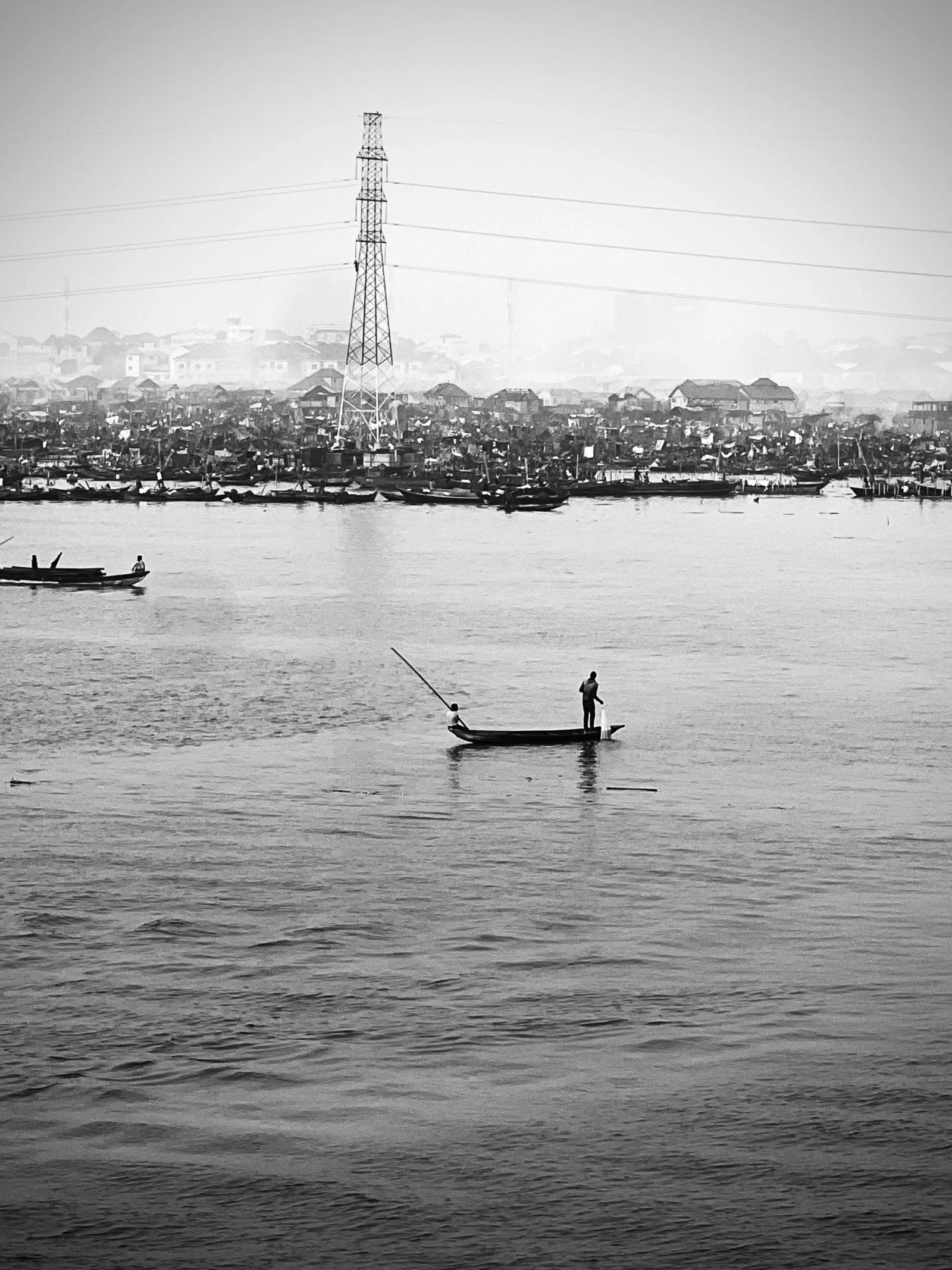
In the third image, a black-and-white image of a lone canoe drifts across the lagoon in the foreground, while a dense waterfront settlement and a tall electricity pylon rise in the background. The government recently demolished part of this settlement because it sits beneath high-tension power lines. The contrast between fragile wooden boats and heavy infrastructure highlights the tension between livelihood
and regulation, survival and state control. The water separates yet connects these realities.
Together, the images show water as an economy, transport system, and lived environment.
Water politics today:
Water in Lagos is deeply political.
• Flooding and displacement: Low-income waterfront communities often face demolition or eviction in the name of development.
• Land reclamation projects: Large coastal developments reshape who can live by the water and who is pushed away.
Water determines space, safety, and opportunity. It reveals power structures as clearly as it reflects the sky.
Key events
A few moments stand out in the Lagos context:
• Transatlantic slave trade: Coastal waters became routes of forced migration and loss. Water holds trauma as well as commerce.
• Colonial port development: British rule reshaped Lagos around maritime trade, making water central to industry and control.
• Urban expansion and land reclamation: Projects that push back the sea or reshape the coastline changed how people relate to water.
• Recurring flooding and climate pressure: Rising waters now expose inequality. Who is displaced? Who is protected?
Ayodeji is a fine art photographer and multidisciplinary visual artist exploring African heritage, identity, and existential themes. His work blends documentary and conceptual approaches to create evocative imagery that sparks dialogue. As a member of Forbes BLK, He has exhibited globally, with his work showcased in São Paulo, London, and the UK, including at Impacto, Kairos, and Black Heritage 365, where his piece Njia was recognized for its deep cultural resonance. More information on this Artworks, Exhibitions, Education, and Portfolio can be found through his instagram here and his website here