

Beach Epiphany




Rodrigo Koraicho is a visual artist and photographer based in São Paulo, working across photography, installation, audiovisual, poetry, and sound. His practice explores contemporary society and human relations, with a particular focus on memory, affection, and the tensions of everyday life. He holds an MA in Aesthetics and Art History from the University of São Paulo.
Growing up in Brazil, Koraicho developed a sense of the beach as genuine reprieve, somewhere to momentarily step outside the demands of daily life. In this he is not romantic about it, just specific. The beach, as he experienced it, was a place of real human presence, relatively free from the pressures of consumption and ambition. That baseline would later shape how he reads Miami Beach.
His work has been exhibited at the History Miami Museum, Leica Gallery (Poland), Ephemere Gallery (Tokyo), and Museu Afro Brasil, among others, and published by The Guardian, Fisheye Magazine, and L'Œil de la Photographie. In 2025 he was named a winner of the Lenzburg Photo Festival Prize.
In 2017, Koraicho arrived in Miami Beach without a fixed plan. He drifted, as he often does when he arrives somewhere new with a camera, allowing himself to be pulled by what he calls "latent" forces, energies that only reveal themselves through sustained attention. What he found was a place he has not stopped returning to. The result is Beach Epiphany, an ongoing photographic investigation into one of the world's most over-imaged, under-examined strips of coastline.
The title comes from a specific quality of experience: brief moments when the ordinary briefly reveals another layer of itself. An epiphany, as Koraicho means it, is not dramatic. It arrives as a gesture, a glance, a small alignment of elements that suddenly feels charged. Photography, for him, is the practice of remaining open to that possibility.
His position as a Brazilian photographer documenting an American beach carries its own significance. He is conscious of offering what he calls "a reverse movement", a gaze that contrasts with the more familiar perspective of the foreign photographer documenting Brazilian shores. Something in this inversion opens the work up.
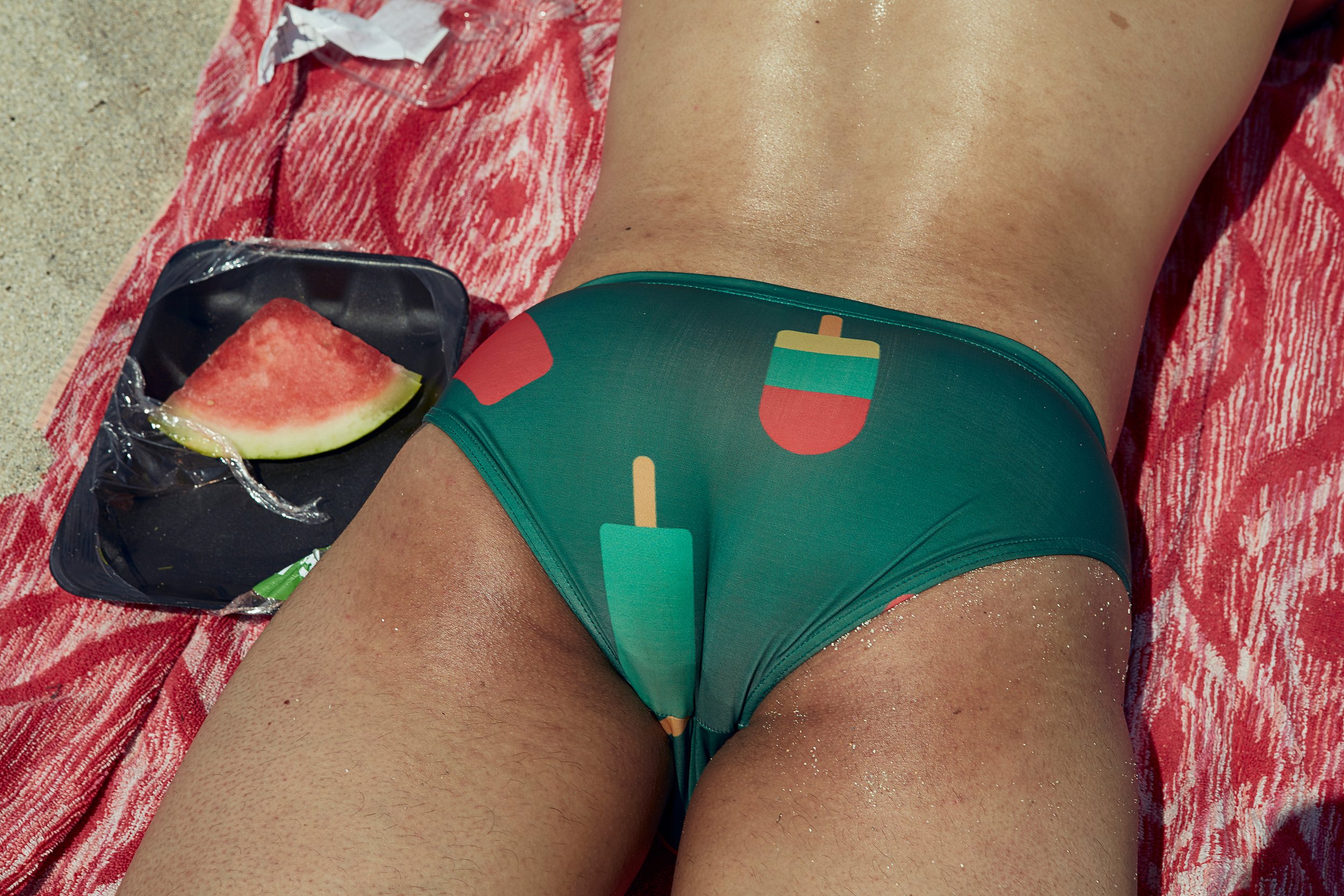
Miami Beach has long functioned as a screen onto which America projects its desires: the sun, the body, the dream of leisure elevated to spectacle. Koraicho is interested in what that projection obscures. "Bodies and desires become both visible and negotiated in public," he says. "Where vulnerability and boldness coexist, fantasies collide with fragile realities.” His photographs hold all of this at once: seductive and uneasy in equal measure, the glamour always sitting beside something unresolved.
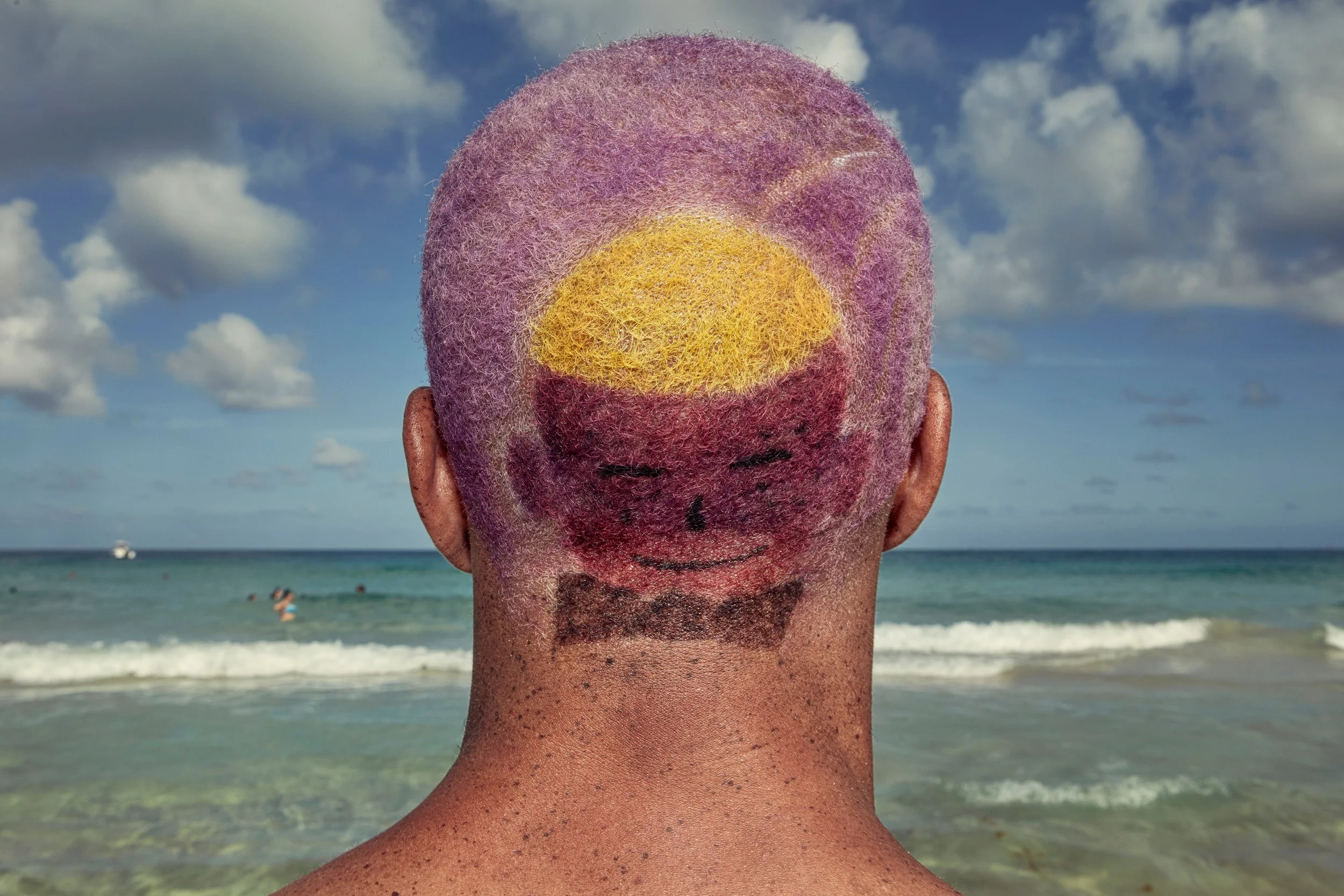
The work also asks whether people become different versions of themselves at the water's edge. Koraicho thinks so, though he resists locating the transformation in the beach itself. "Identity is never entirely fixed," he says. "We continuously shift in relation to the spaces we inhabit, the people around us, and the roles we consciously or unconsciously assume." The shoreline simply makes this more visible. Social boundaries loosen, self-projection becomes more permissible.
Miami Beach is not one community but many, formed not through permanent residence but through shared rituals: people who run together along the shoreline at dusk, families returning to the same patch of sand each summer, strangers who gather for reasons ranging from vacation to migration to labour. The economic divisions are plain to see, hotel chairs on one side, towels on open sand on the other. But Koraicho finds something levelling in it too. "The sand and the sea remain its most valuable and shared elements," he says. "In the end, everyone is drawn into the same water."
Because Miami Beach is so enmeshed with the urban environment around it, the tensions that the beach might otherwise let you set down seem to follow you to the water. The city extends all the way to the shoreline. What might otherwise suggest escape also carries signs of pressure, artifice, and imbalance. Rather than resolving into utopia or dystopia, the beach holds both simultaneously. It is precisely in that overlap, Koraicho suggests, that the work finds its tension. Escape and spectacle share the same chair.
He observes the ecological dimension with the same refusal to simplify. Miami Beach is a city built on reclaimed land, facing rising sea levels whose effects are already being felt. Not as a future threat, but as a present condition quietly reshaping how the place exists and how it is experienced. "I believe it is already a place undergoing transformation," he says. Whether Beach Epiphany becomes, with time, an inadvertent archive of a place mid-disappearance is a question the work holds open.
But Koraicho is careful not to let that reading consume the whole picture. Alongside the ecological anxiety and the spectacle of excess, he is equally attentive to what persists: families gathering, friendships forming, people inhabiting the same space in their own ways. The beach under threat is also still, stubbornly, a place where ordinary life continues.
Photographing strangers in an environment defined by exposure requires active rather than passive ethics. Koraicho makes himself visible, shows people the photographs he has taken, explains the nature of the work. He stays attentive to when to preserve someone's identity, conscious of the point where vulnerability shifts from an element of reflection into mere aesthetic contemplation, and equally alert to when a person fully embraces their visibility as a deliberate act of self-expression.
This tension between observation and involvement is one he has no interest in resolving. "Sometimes, through conversation and exchange, someone might offer a gesture, a pose, or a direction that had not been anticipated," he says. "This interplay allows the work to develop in a way that feels both visually richer and ethically grounded."
Beach Epiphany has been developing since 2017. Duration, for Koraicho, is not background; it is a formal element of the work. Returning to the same place over years produces a kind of attention that a single visit could never yield. His editing has grown more rigorous; his eye for how individual images speak to one another, sharper. The visual tapestry the work produces can only be woven over time.
What Beach Epiphany offers is not a verdict on Miami Beach, not utopia or dystopia, but a sustained act of looking at a place that refuses to sit still. At a shoreline that belongs, ultimately, to no one.
Written by Jai Toor