

Notice the Water You’re Already In
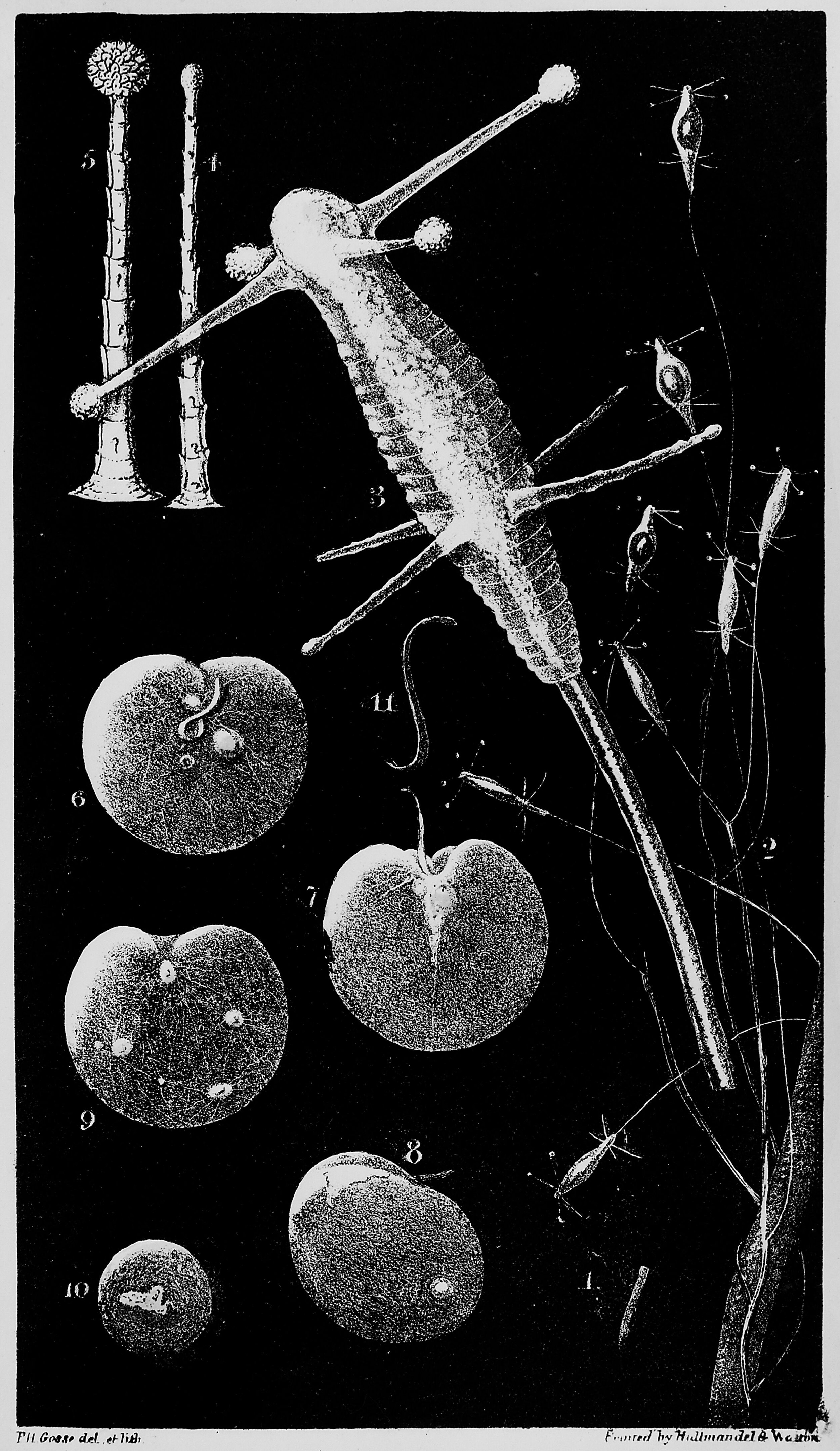
M0016969: Illustration of two types of protozoa: Coryne stauridiai and Noctiluca miliaris, 1853. Source: Wellcome Collection.
Ask a roomful of adults to spend ten minutes painting a feeling they can't describe in words, and you will watch something curious happen. People ask quietly, slightly embarrassed questions: "Is there a wrong way to do this?" "What are we meant to end up with?" Nobody's painting will be marked. And still, the not-knowing what it's for, a task without a destination, makes some people genuinely uncomfortable.
We have built a culture that treats attention as a transaction. You look at something in order to extract something: a photograph, research finding, a post, an insight you can later produce as evidence that the looking happened. Attention with no output attached has become almost illegible to us. We don't quite know what to do with our eyes, or our hands, or our hour, if nothing is going to come out the other end of it. When you ask someone to simply pay attention to something, a river, a sound, a piece of paint moving across a wet surface, the instruction itself starts to feel suspect. Surely there's a point to this. It's the unfamiliar sensation of attention that isn't working toward anything that produces discomfort. We have built, across work, social media, even leisure, an expectation that attention must produce something.
We've done this before, with water itself. Hydration used to be something you sensed: thirst, the mineral weight of a mouthful, the difference between water from a natural spring and water that has been processed. Now it's eight glasses. Two litres. A plastic bottle with measurement lines down the side and an app that nags you to comply. We replaced a relationship with a rule, because a rule is easier to check off than a sense is to trust. We have done to hydration exactly what we have done to attention: we have turned something relational into something measurable, so we can stop noticing and simply comply.The same trade, relationship for output, sensing for counting, is what made grown adults flinch at being asked to simply look at a river without any further prompt, asking to paint a feeling and focus on making as thinking instead of the outcome. We have done it to our bodies. We have done it to our attention. It's the same move, twice.
It is worth saying plainly that this is not how attention has always worked. Walk through the history of how people have known the natural world, and the split between looking and making barely exists. The great naturalist-illustrators of the sixteenth and seventeenth centuries didn't have a research method and a separate hobby; the observation and the image were the same act, performed at the same time. A herbal drawn from life wasn't a record of looking, it was the looking, made visible. We don’t always need to ask “what is this for?”
What changed was an institutional decision, made gradually across converging currents and then absolutely, that serious knowledge had to come stamped with a method, a deliverable, a defensible output and that anything resembling play, sensing, or making for its own sake belonged somewhere else, in a separate and lesser category called art, or worse, hobby. Call it the scientific revolution, gesturing toward empiricism as the only legitimate way of knowing. Or what Max Weber named the Protestant work ethic, the inheritance that made idleness feel like failure and more recently, what Shoshana Zuboff calls the logic of surveillance capitalism, the conversion of our own behaviour into data, harvested and sold back to us, until even rest has to prove its worth before it counts. We lost the capacity for unproductive attention, as we built a culture that stopped knowing how to value it.
The costs are showing up everywhere, in burnout, in the strange anxiety of unstructured time, in the fact that rest itself now needs an app and a streak counter to feel legitimate. Play is not the opposite of seriousness. It is, very often, the only way certain kinds of knowledge get produced at all, the kind that lives in you before it lives in the sentence you produce, the kind a number can't hold.
Here is the experiment worth running: find ten minutes with no deliverable attached, and notice something, properly, slowly, without photographing it, summarising it, or turning it into content. Notice how long it takes before some part of you starts asking what the point is. That feeling, uncomfortable as it is, is the most honest measurement we have of how far we've drifted from knowing how to simply pay attention for the joy of it. It is not a flaw in you. It is a skill we let atrophy, collectively, and one that is entirely recoverable, by anyone willing to sit with the discomfort of attention that isn't working toward anything at all.
What we're missing isn't another wellness offering. Not an app, not a retreat, not a subscription to teach you presence for a monthly fee. Those just put a price on community and on the transactional logic this essay is describing: attention, repackaged and sold back to you as a service. What we need is smaller than that: more ordinary spaces, free of charge and free of deliverables, where attention without outcome and community without a price tag is simply allowed to happen.
Just like the water doesn't ask you to drink more of it. It asks you to notice the water you're already in.
ADDITIONAL NOTES:
Play is not the opposite of seriousness: The cultures that have retained ritual, play, and unproductive attention as legitimate practices (not as escapism, but as ways of knowing) are doing something we've structurally lost. What's unusual is that we've come to treat the absence of unstructured play as progress rather than loss.
Water: something everyone touches daily and almost nobody actually attends to, precisely because it has no obvious "use" left to extract once you've already used it. You've already drunk it, bathed in it, cooked with it, its usefulness is spent the moment it's used, which means the only thing left to do with water is notice it, or not. Hydration, like attention, has been turned into a rule applied from outside the body rather than a relationship recovered through noticing.
Written by Claudia Neuschulz. Claudia is a DPhil researcher at the University of Oxford, working on the social psychology of water quality. She also works for the European Bank of Reconstruction and Development in Water Finance, and founded Claudiclouds, where she writes about water, Attention, and Play.