

FLOWING BETWEEN PARALLELS
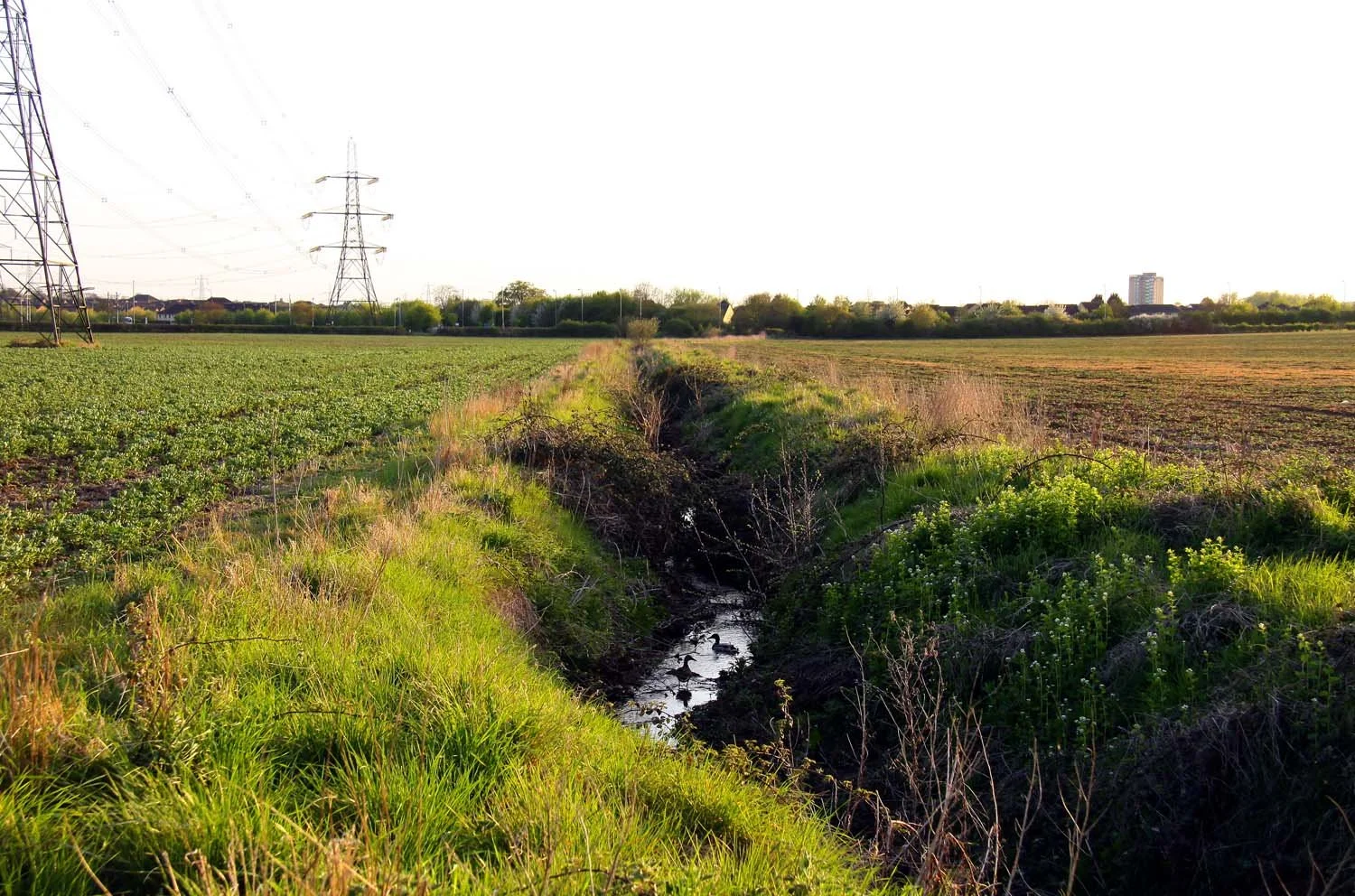
Image by Steve Daniels

A map of the Leys estates showing the course of Northfield Brook.
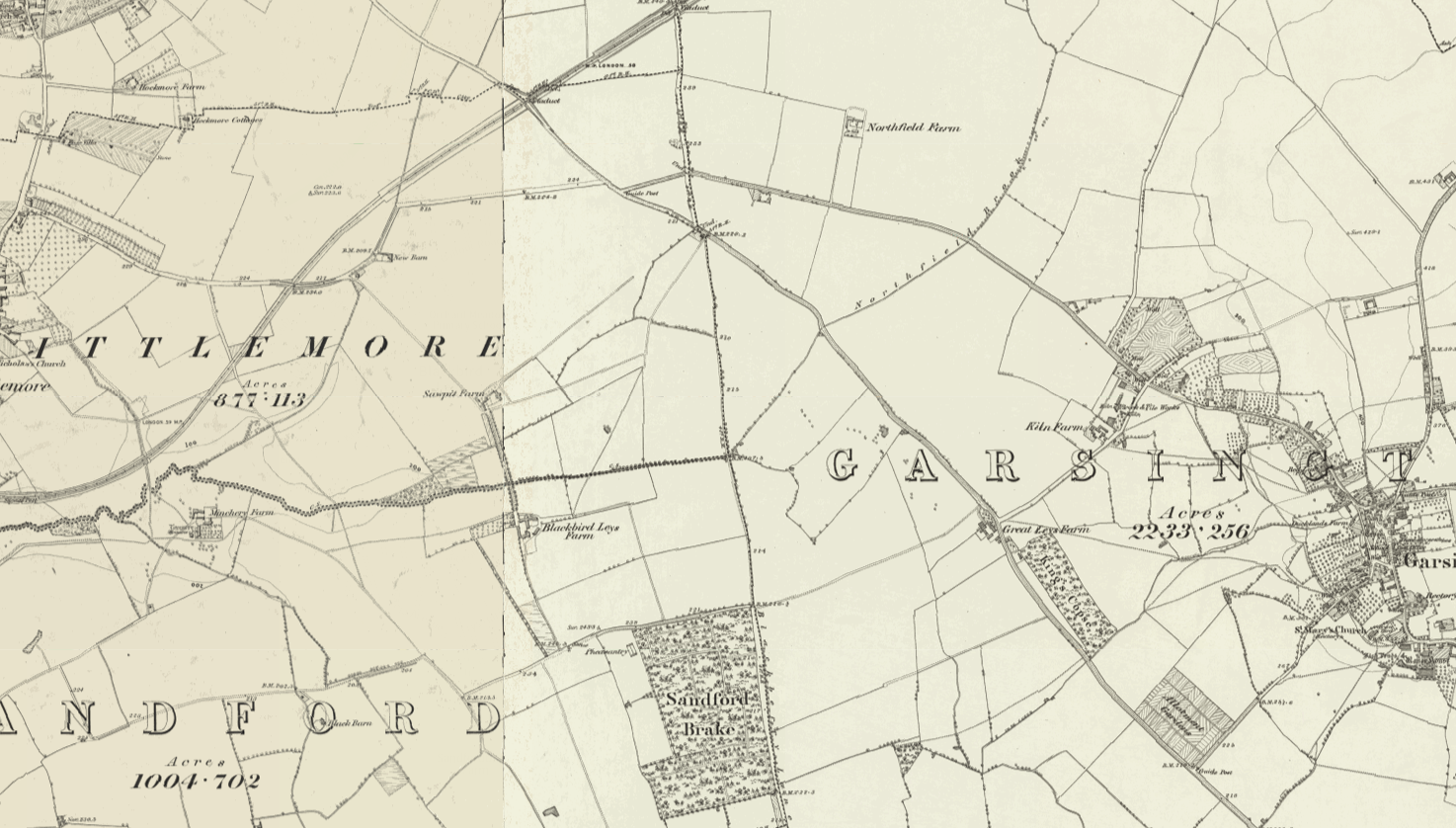
A map of the same area from 1887. See Northfield Brook following almost exactly the same course.
THE SONG OF THE NORTH FIELD
Bringing life to the city she,
Flows never tripping or stumbling,
Never frozen.
Even when the world’s at its coldest she bubbles on.
Her quiet song,
Always part of the scene.
Unseen she
Watches as
Youngest becomes oldest,
Molding him,
Eroding a path,
Therefore part of all he creates.
Every date on the calendar,
She was there before.
Moving as a community
Grew around her,
Gave them foundation,
Identity.
Even her name.
Set boundaries that became
Constraints to play within,
Gaps for imaginations to fill.
She’s here still.
Never been still.
Never will.
Her children travel wherever,
And return to find her in the same place.
The north field.
Where they
Used to drop leaves and watch them race
Under the bridge.
Her heart is where family begins,
And while her song persists,
There is always hope within us,
Always a home to come back to,
And if that’s true,
There’s something to live for,
To fight for.
All that she quietly brings,
Gifts wrapped in a song,
A place to belong,
A life force.
I’m from Oxford. I don’t feel like I'm “from" anywhere else, it’s home. Most people picture the world famous “dreaming spires,” and the elitism of the University. But I grew up on a lesser known side of this divided city. Not many people know that Oxford and its surrounding county contain some of the most striking socio-economic disparities found anywhere in Europe.
For as long as I can remember, movies and TV shows have happily cashed in on perpetuating the city’s idyllic, quintessentially British image, encouraged by the famous University and its attached tourist industry. The latest embodiment of this trend is Netflix’s 2025 worldwide number 1 hit “My Oxford Year”. Unsurprisingly, it didn't show its 70 million plus viewers that Oxford also tops the rankings when it comes to being one of the UK’s most unequal cities - holding some of England’s most underserved areas, as well as its most privileged, often side by side.
On paper, it’s an affluent city, in an affluent county, in an affluent region, with positive health and wealth stats that exceed national averages in many areas. Yet these broad statistics hide pockets of deprivation, where levels of educational attainment, crime, and life expectancy drastically counter these trends. This is the Oxford I grew up in. I didn’t even know Oxford was a famous place until I was well into my teens and started wondering why so many people were taking pictures of the old buildings in town.
The Oxford I’m from is among the most underserved wards in England according to the government's Index of Multiple Deprivation (the IMD). Life expectancy for men where I live is currently 13 years lower than it is in an area of Oxford just a 20 minute cycle to the north. In real terms, that means a child from my estate, compared to a child 3.7 miles across the city, is way more likely to lose their dad before reaching adulthood than a child living a little further north. According to the stats, that same child is more likely to grow up around violence, attend under-resourced schools, deal with higher stress, and face greater risks of poor mental health. More likely to experience crime, murder, suicide and early death in their immediate surroundings. They are more likely to die early themselves.
We call the area I live in Greater Leys. I moved there from another part of Oxford when it was still a building site. That was in the mid 1990s. It was built as an expansion of Blackbird Leys; a housing estate constructed in the 1950s to house workers of the city’s growing car plant - the place where BMW’s highly profitable Mini line is built today. Both estates acquired reputations as “rough” before construction was even finished. Back in the 50s, the first vicar in the area was refused finance to put a phone line in the local church based on its postcode.
Although me and everyone I’ve ever known call it Greater Leys, for some reason, local government refers to the area as Northfield Brook; that’s how you’ll find it listed in the IMD. Looking at a map one day, I realised that this name comes from the dirty little stream that runs through Greater Leys and Blackbird Leys we know locally as “The Brook”. Most people who grew up in the area will have a funny story about someone trying to jump over the brook and falling in, or finding some dead animal or other disgusting object in it. The stream begins as several tributaries known as Hollow Brook. These join together over the course of a mile to become Northfield Brook, just under a mile from the city’s border. The brook flows out of a farmer’s field, and enters Oxford through a tunnel, not far from my house. For a time it runs parallel to Grenoble Road, the road that defines the southern border of the city. On one side of this road; the neglected suburbs of Oxford, on the other side; rural Oxfordshire. At one end of Northfield Brook is a ward that sits among England’s 9% most deprived communities, the ward at the other end is one of the 7% most privileged wards in the country. The stream follows Grenoble Road for a bit, before cutting into the city and continuing its journey, bisecting the Leys estates until it merges with another stream near Oxford Science Park, and ultimately joins the Thames.
Over its course, the little stream that gives my estate its name flows from one of England's most affluent wards, into one of its most neglected. Then onwards, through an area that in recent memory had some of the lowest average GCSE scores in the UK, towards a Science Park built to attract some of the world’s most innovative businesses and “highly educated” minds. All in just over 3 miles. I became fascinated with the idea that this insignificant stream - little more than a watery ditch, lives on both sides of one of England’s most stark socio-economic disparities. The Brook is the physical antonym of the phrase “trickle down economics”. In a small city like Oxford - celebrated for its wealth and knowledge, it somehow seems even more perverse that anyone should be undereducated, starving, or homeless. On deeper inspection however, the systems of elitism and privilege - and therefore exclusion and deprivation the city’s iconic university embraces and exports around the world make these dynamics inevitable.
While writing this article, I became aware of the amount of water metaphors used to explain money systems: assets can be liquid or frozen, you can have an income stream, cash flow problems, be drowning in debt, or keep your head above water, markets can be flooded, funds can be siphoned, capital can dry up… there’s more. I don’t know what significance this has, but it seems worth mentioning, if for no other reason than it adds an additional layer of irony to my story.
The friction caused by growing up surrounded by deprivation, in a city whose very name is a buzz word for affluence and privilege has shaped me into an artist inspired by juxtaposition and contrast - naturally I found the contexts that the water in Northfield Brook bridges to be fertile ground for creativity.
The first opportunity I had to produce something from this provocation was a collaboration with Dr. Noel Lobley, an ethnomusicologist and artist based at the University of Virginia. He was working on a project focused on the sound of water in different forms, and asked me to get involved in some way. I contributed a field recording of my small river, made by placing an old phone under one of the many bridges spanning the brook, and leaving it recording for an hour. This recording was integrated into a soundscape composition featuring water sounds collected from around the world.
In my experience when the right time comes, the opportunity to manifest an idea will often present itself several times. I think it’s part of an artist’s job to make yourself available, spot those opportunities, and make something with them. Within a few weeks of making that first recording of the brook, I was asked to contribute to We Are Water, a sound collaboration between South African Hip Hop artist Emile Jansen (Emile YX) and British/Nigerian sound artivist Dr. Yewande Okuleye. They were exploring water as a metaphor for interconnectedness, resilience, and the flow of human experiences as part of an Arts in Medicine Fellowship program.
I immediately decided to create an ode to Northfield Brook. I wrote a poem and recorded myself performing it crouched on the banks of the stream, just outside the border of Oxford. I made a video of my walk back - crossing the road that separates one of the most privileged areas in the country from one of its most deprived. These elements came together to form an audio/visual piece you can view here.
To hear about my next expedition, check out some of my other projects, and keep up to date with my future work you can find me on Instagram @RawzCreates or explore my website www.RawzCreates.com